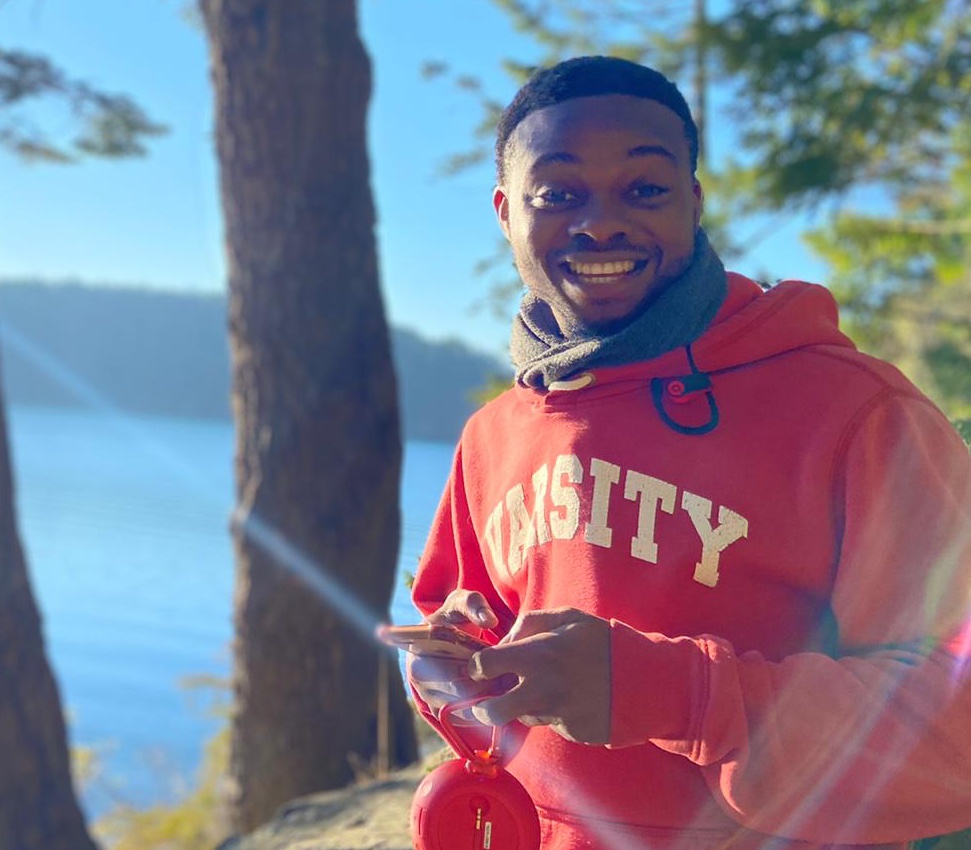
Bio
I’m a PhD candidate in the Paul G. Allen School of Computer Science & Engineering at the University of Washington, advised by Kurtis Heimerl in the ICTD lab. I hold a BS in Electrical Engineering & Computer Science and an MEng in Computer Science, both from MIT.
My research makes machine learning practical in low-resource settings — spanning edge ML, federated learning, and hardware–software co-design. Right now I’m developing mixture-of-expert models for mobile vision transformers as an approach to structured sparsity for efficient inference. My main application is wildlife monitoring for ecological conservation, though the work is broadly applicable to edge deep learning: I pursue both a multimodal approach to detection (video and sound) and edge optimization for energy efficiency (through nature-inspired inductive biases), testing proposed models on CPU, Raspberry Pi, Google Edge TPU, and Apple Neural Engine.
I partner with stakeholders in conservation (Conservation X Labs, the Quantitative Ecology Lab) and agriculture (Nelson Farms in Eastern Washington) to test these models in the field. My research has been supported by the U.S. National AI Research Resource (NAIRR) Pilot, an Azure AI for Earth grant, and a UW CS for the Environment Fellowship.
For current work, see my selected projects and publications.
My current guides are Mandelbrot and Hegel.